Bitcoin
1 days agoNews Editor

CoinDesk says Bitcoin’s cultural impact may outweigh the asset itself after 18 years

CoinDesk opinion writer Nikhilesh De argues that the Bitcoin white paper delivered much of what Satoshi Nakamoto originally set out to achieve, but that Bitcoin’s broader cultural effect may matter even more than the network or asset itself. The piece revisits what Bitcoin has actually accomplished 18 years after its creation and frames the discussion beyond technical design alone. Rather than focusing only on protocol goals, the article points to the wider imprint Bitcoin has left on public discourse and culture. The central takeaway is that Bitcoin’s legacy may be measured not just by what the white paper built, but also by the ideas and social changes it helped set in motion.

00
CoinDesk says Bitcoin’s cultural impact may outweigh the asset itself after 18 years
crypto market
2 months agoNews Editor

Crypto traders turn to “dopamine shopping” as fake luxury checkouts gain traction

A niche online habit known as “dopamine shopping” is finding an audience among crypto users whose portfolios have stalled. The trend, which emerged in South Korea earlier this year, lets people browse and “buy” expensive items such as luxury watches, designer clothing, and upscale meals without spending real money. The appeal is the sensation of making a big purchase without taking the financial hit. Protos said the behavior is showing up in crypto circles after the sector’s total market capitalization fell 30% from its all-time high a year ago, leaving less room for actual luxury spending. A Singapore-based lawyer and crypto influencer mocked the idea by joking about a startup that would add real giveaways to fake shopping apps, saying a business that paired a dopamine purchase with a lottery entry for a real item could be worth “multi billions.” Examples already online include Dopamine Shop, which lists fake luxury jewelry and watches, and FoodNeverComes, a site that imitates the UberEats ordering flow. The BBC recently said FoodNeverComes has logged more than 2.7 million visitors since June 2026. This week, a commentator pushed the concept deeper into crypto culture after posting screenshots of fake storefronts that drew nearly two million views.

1580
Crypto traders turn to “dopamine shopping” as fake luxury checkouts gain traction
Burning Man
3 months agoNews Editor

Burning Man co-founder John Law says the event lost its anarchist soul as Silicon Valley moved in

Burning Man co-founder John Law says the desert gathering that began as a leaderless, anti-establishment experiment no longer resembles what its early builders created. In a recent essay published by SF Standard, Law argued that the event, once shaped by a small group of anarchist-minded creators with no owner and no fixed hierarchy, changed beyond recognition after Silicon Valley elites and capital poured in. Law traced the roots of Burning Man back to San Francisco’s underground culture in the late 1970s and to groups such as Suicide Club and Cacophony Society, which operated without a business model or formal structure. He said the early scene was closer to a temporary autonomous zone than a branded institution. He also pushed back on the idea that Burning Man began with a tightly defined philosophy, calling later frameworks such as the official “Ten Principles” a retrospective packaging of what had originally been a messy, improvised collective experiment. According to Law, the turning point came in the 1990s as the internet industry rose. After Wired put Burning Man on its cover in 1996, attendance grew from about 70 people in 1990 to 25,000 by 1999. He said wealthy tech figures became regulars, while high-priced tickets, luxury camps and organizational expansion turned the event into something closer to a large commercial institution than the egalitarian desert experiment he remembers.

1250
Burning Man co-founder John Law says the event lost its anarchist soul as Silicon Valley moved in
Niulai
3 months agoNews Editor

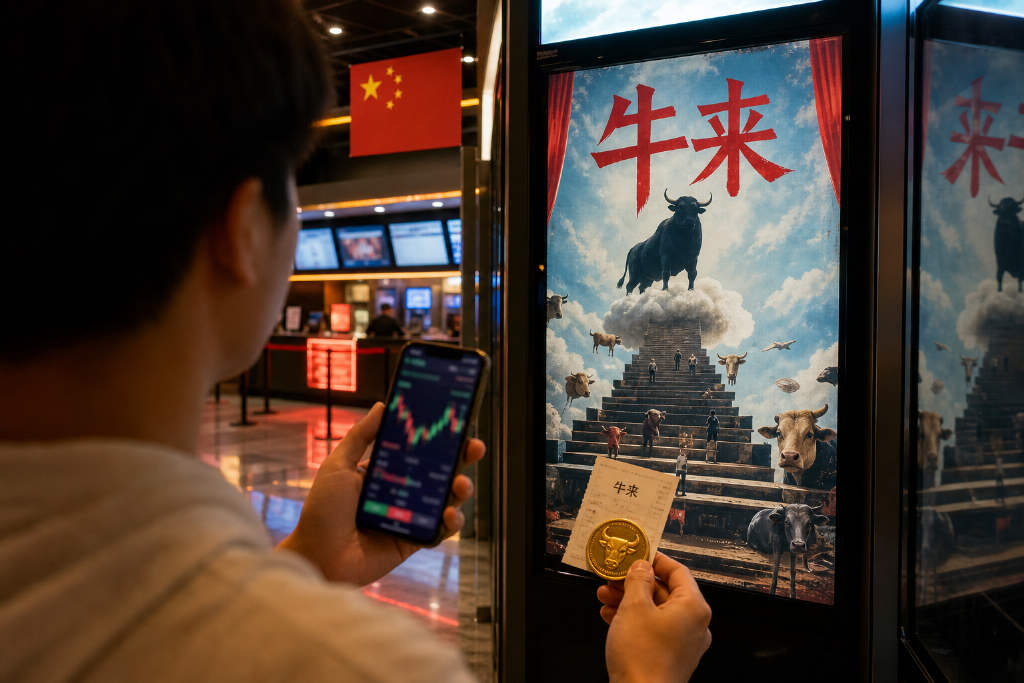
Niulai meme coin nears $30 million market cap in three days as obscure animated film goes viral

An obscure animated film titled Niulai has turned into an unlikely crossover story between internet culture and crypto trading. Released on Aug. 5, the movie first drew attention for its rough visuals, unusual plot, and very weak early box office performance. After nine days in theaters, it had grossed only a little more than 7,000 yuan, but clips, posters, and discussion about its “abstract” style spread quickly online and pushed the film into wider public view. According to Maoyan Pro data cited in the source article, Niulai had reached 2.531 million yuan in cumulative box office revenue as of 10:00 a.m. on Aug. 16, 2026, with a projected final total of about 18.376 million yuan. At the same time, a meme coin using the same name launched on Aug. 14 and surged within days. The article says trader Lana disclosed buying $99 worth of the token when its market cap was around $10,000. By Aug. 15, the token’s market cap had climbed above $12 million, and it later rose to nearly $30 million, marking what the report described as a 3,000x move in three days. The story has since become a case study in how attention around a cultural symbol can spill directly into on-chain speculation.

1260
Niulai meme coin nears $30 million market cap in three days as obscure animated film goes viral
POAP
3 months agoNews Editor

POAP Ends Further Development, Leaving On-Chain Memories but No Durable Business Model

POAP, the digital collectible project known for turning event attendance into on-chain badges, is shutting down further development after more than five years. Co-founder Isabel announced the decision on Aug. 3, prompting many early users to reopen their wallets and revisit badges tied to Ethereum conferences, hackathons, community gatherings and major moments such as the Merge. The badges remain visible on-chain, even as the team behind them steps away. The project began as an ERC-721 experiment at ETHDenver in February 2019 and later grew into one of crypto’s most recognizable participation credentials. By March 2020, POAP had appeared at more than 100 events and around 7,000 badges had been claimed. It later expanded into brand campaigns, including activations by Adidas and Estée Lauder, and saw one of its defining moments during Ethereum’s September 2022 Merge celebration, when more than 41,000 people watched the official party and participants placed more than 366,000 pixels on a collaborative canvas. The report argues that POAP’s core tension resembled an earlier Web2 experiment: GetGlue, a check-in and digital sticker platform that also turned user activity into collectible artifacts but failed to build a lasting business. In POAP’s case, on-chain persistence solved the record-retention problem. It did not solve monetization. The same qualities that made POAP meaningful as a free, low-friction record of shared experience also made it difficult to turn into a sustainable company without undermining the product’s original purpose.

2360
POAP Ends Further Development, Leaving On-Chain Memories but No Durable Business Model
Bitcoin
4 months agoNews Editor

Chinese AI Microdrama About Finding 4,735 BTC During a Divorce Goes Viral

A Chinese AI-generated microdrama titled "I Only Realized I Had 4,735 Bitcoin When I Was About to Get Divorced" has gained attention for turning crypto wealth into a revenge-driven melodrama. The story follows a male lead who, in the middle of a divorce, discovers an old wallet holding 4,735 BTC, a stash the article says is worth about $312 million. That twist instantly changes his role from a ridiculed underdog to a crypto whale. The report frames the show as a familiar wish-fulfillment formula now repackaged with Web3 elements: a looked-down-on husband, a collapsing marriage, sudden wealth, and a sequence of comebacks aimed at his ex-wife and rivals. It also contrasts the fictional setup with real-world crypto divorce disputes, which more often involve hidden holdings, wallet tracing, and private investigators rather than accidental fortunes. The original article says it was shared mainly because the premise is amusing, not as a recommendation to watch the series.

1710
Chinese AI Microdrama About Finding 4,735 BTC During a Divorce Goes Viral
Total 27 items
Go topage